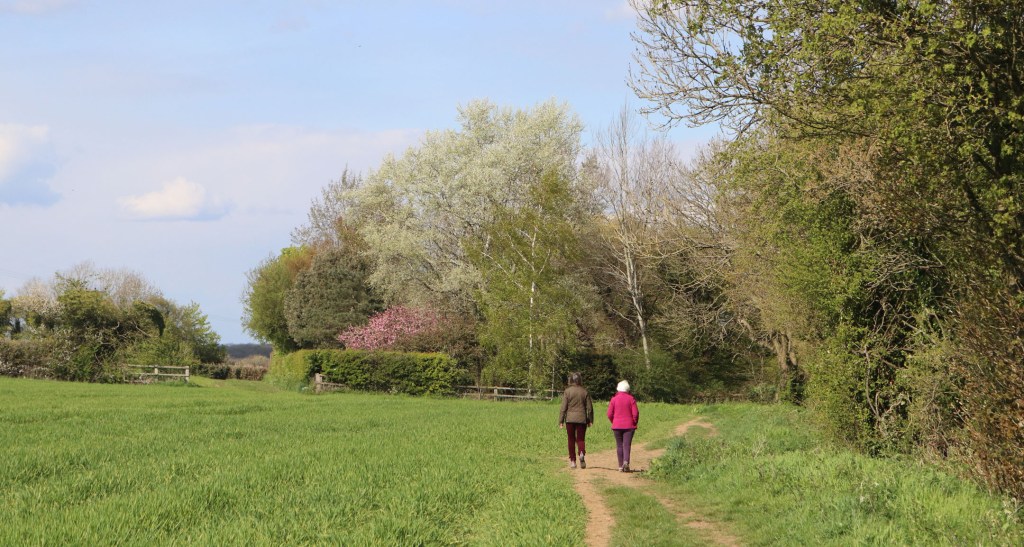
Why do our footpaths need saving? The History of the Definitive map
When we go for a walk either at home or when we’re away, we use footpaths that we always have used, follow marked routes or we grab a map, maybe an Ordnance Survey map and follow the footpaths marked on it.
But not all of the footpaths that we use or can see marked on the map are legal rights of way.
To understand how to save our footpaths we need to take a quick look back in history at how footpaths became rights of way.
In 1932 the first footpath surveys took place for the Rights of Way Act and in 1949 an additional Act of Parliament sought to formalise rights of way further. Over the many years since Rights of Way first became formalised, it became apparent that for many different and varying reasons, many footpaths had been accidentally missed or not documented correctly. In 2000 the government brought forward a new act of Parliament “The Countryside and Rights of Way Act” which contained a section that once again aimed at preserving rights of access.
A small clause within the Act stated all Rights of Way must be properly documented prior to 2026, and those that were not documented properly by that time would be lost forever. In early 2023, due to the length of time the modification process takes and the sheer volume of modifications waiting to be processed, this date was altered and all documentation had to be in order by 2032 In 2025 the current government have abolished this time limit and there is currently no deadline. However, this could easily change again and so it is important ensure all our footpaths are properly documented.
A pathway is classified as a Right of Way when it is officially included on a specific map called The Definitive Map. This map is kept at County Hall and is essential because it designates the routes where the public has a formalised legal right to pass.
The Definitive Map came into existence as a part of the National Parks and Access to the Countryside Act 1949, which required counties in England and Wales to document public paths; each County Council tasked local parish or district councils to survey and decide which pathways should be noted as Rights of Way.
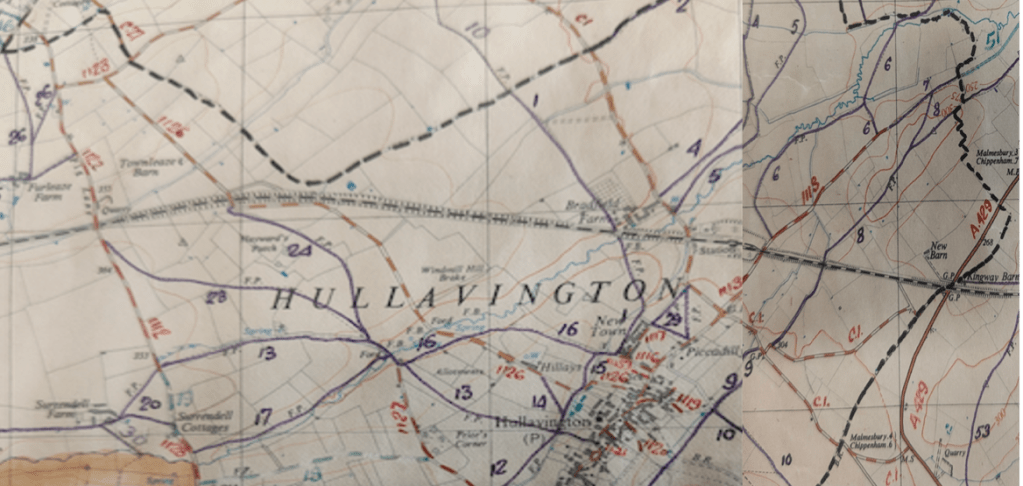
Please look at the documents below for further information on why saving our footpaths is so important and the history behind the map.
 Hullavington Village